
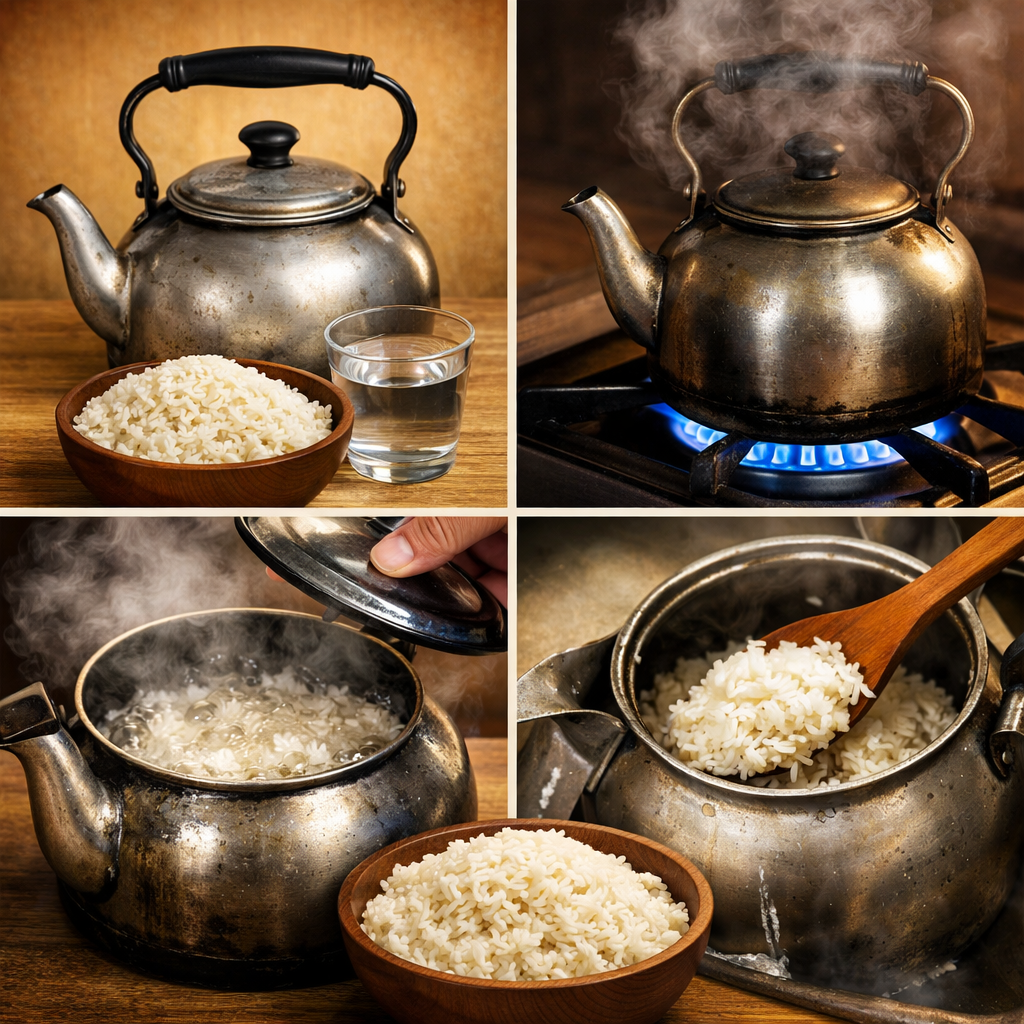
Cooking rice without a pot may sound unusual, but with a little creativity, you can make it work using a kettle. This guide walks you through the process step by step, highlights common mistakes to avoid, and offers final thoughts on making the most of this unconventional cooking method.
Introduction
Imagine you want to cook rice, but all your pots are gone, and you’re left with just a kettle. What do you do? The answer: improvise. Just as the saying goes, “When life gives you lemons, make lemonade,” here we say, “When all your pots disappear, use the kettle.” A kettle isn’t just for boiling water or eggs—it can be repurposed for cooking rice too. Note: this guide focuses on a manual stovetop kettle, not an electric one.
Step-by-Step Guide
Ensure your kettle is thoroughly cleaned before use. Residual tea or coffee flavors can affect the taste of your rice.
Use a cup to measure the rice. A standard serving is about 1 cup of uncooked rice per person.
Wash the rice under cold water until the water runs clear. This removes excess starch and prevents the rice from becoming too sticky.
Place the rinsed rice directly into the kettle.
Use the ratio of 1 cup of rice to 2 cups of water. Adjust depending on the type of rice (e.g., basmati may need less water).
Place the kettle on the stovetop over medium heat. Keep the lid slightly ajar to prevent boiling over.
Once the water boils, reduce the heat to low and let the rice simmer. This usually takes 15–20 minutes.
When the water is absorbed and the rice is tender, remove the kettle from the heat.
Use a fork to fluff the rice before serving.
Things to Avoid
Do not overfill the kettle: Rice expands as it cooks, so leave enough room for water and steam circulation.
Avoid high heat: Excessive heat can cause the rice to burn at the bottom of the kettle.
Don’t skip rinsing: Unwashed rice can become gummy and clump together.
Avoid opening the lid too often: This releases steam and slows down the cooking process.
Final Thoughts
Cooking rice in a kettle may not be the most conventional method, but it’s a practical solution when pots aren’t available. It teaches resourcefulness and creativity in the kitchen. While the kettle may not replace your favorite saucepan, it proves that with a little ingenuity, you can adapt to almost any situation. So next time you’re short on cookware, remember: the kettle isn’t just for tea—it can save dinner too.











Leave a Reply