
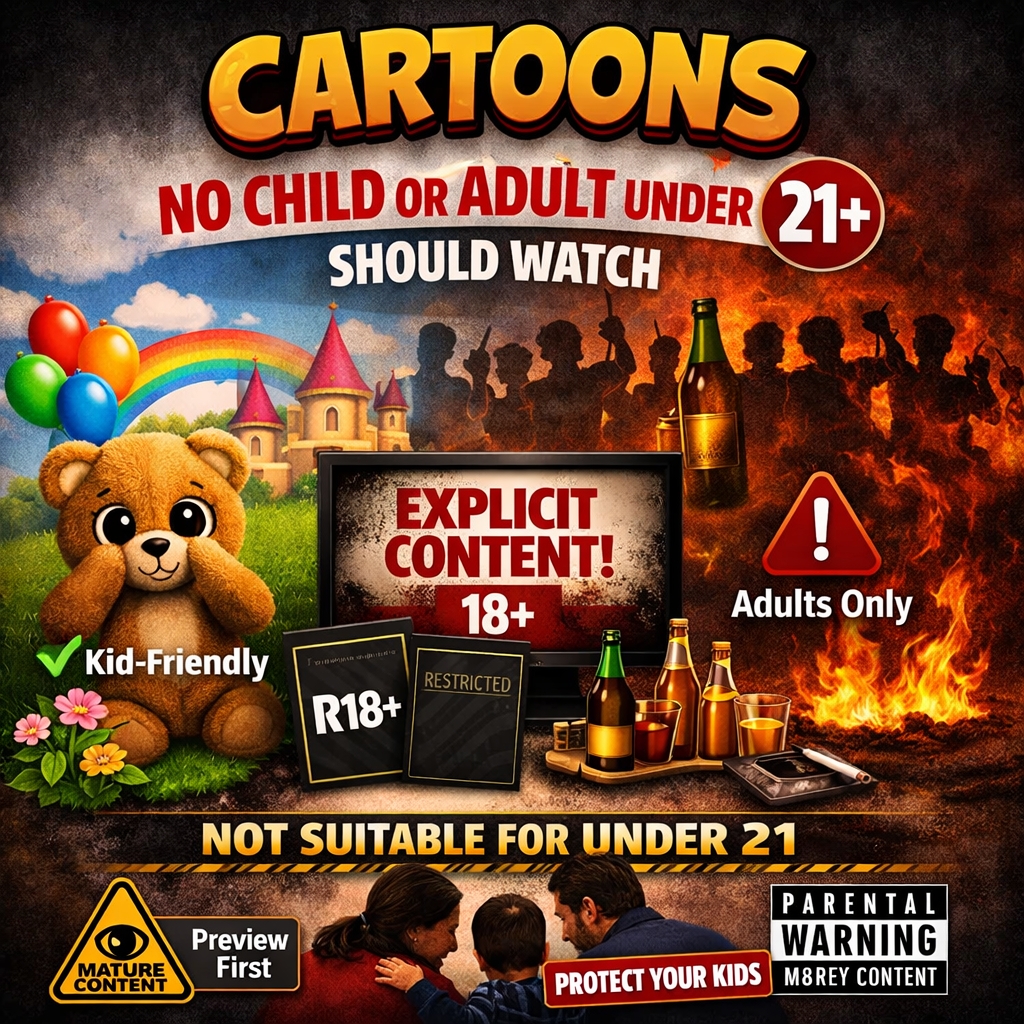
For decades, cartoons and animations have been widely regarded as harmless entertainment, often associated with children because of their colorful visuals, playful characters, and lighthearted storytelling. However, this assumption can be dangerously misleading. Not all animated films or series are created for young audiences, and some contain themes, imagery, and explicit content that are highly inappropriate—even for adults under the age of 21.
The misconception that “if it’s animated, it must be safe for kids” has led many parents and guardians to overlook the importance of carefully screening what their children watch. In reality, animation is simply a medium, not a guarantee of innocence. Just as live‑action films can range from family‑friendly to deeply disturbing, cartoons can also explore mature, graphic, or offensive subject matter.
This is why it is crucial for parents, guardians, and even young adults to preview content before allowing it into their homes. We may not have control over what studios produce, but we do have control over what we consume and what we expose our children to. Exercising discernment is not just wise—it is necessary.
Examples of Cartoons to Avoid
Sausage Party
Despite its playful title and animated style, Sausage Party is not a children’s film. It is filled with crude humor, explicit sexual references, and graphic scenes that are inappropriate for younger audiences. Even adults may find its content offensive or excessive.
Spermageddon
This is another example of animation that crosses into extreme adult territory. Its themes and visuals are not only unsuitable for children but also for younger adults. The explicit nature of the content makes it inappropriate for anyone under 21, and even older viewers should approach it with caution.
Why This Matters
- Children are impressionable. Exposure to explicit or disturbing content can shape their understanding of relationships, morality, and behavior in harmful ways.
- Parents must be gatekeepers. It is not enough to assume that “cartoon equals safe.” Vigilance is required.
- Media literacy is essential. Recognizing that animation is a medium for all kinds of storytelling helps us avoid dangerous assumptions.
Final Thoughts
Cartoons are not inherently good or bad—they are simply a form of art and storytelling. What matters is the content within them. While many animations bring joy, laughter, and valuable lessons to children, others are deliberately designed for mature audiences and can be harmful if viewed prematurely.
The responsibility lies with us: parents, guardians, and individuals. We must be intentional about what we allow into our homes and what we expose ourselves and our children to. Entertainment should enrich, not corrupt.
In the end, the guiding principle is simple: watch before you allow others to watch. Protecting the minds and hearts of the younger generation is worth the extra effort.









Leave a Reply